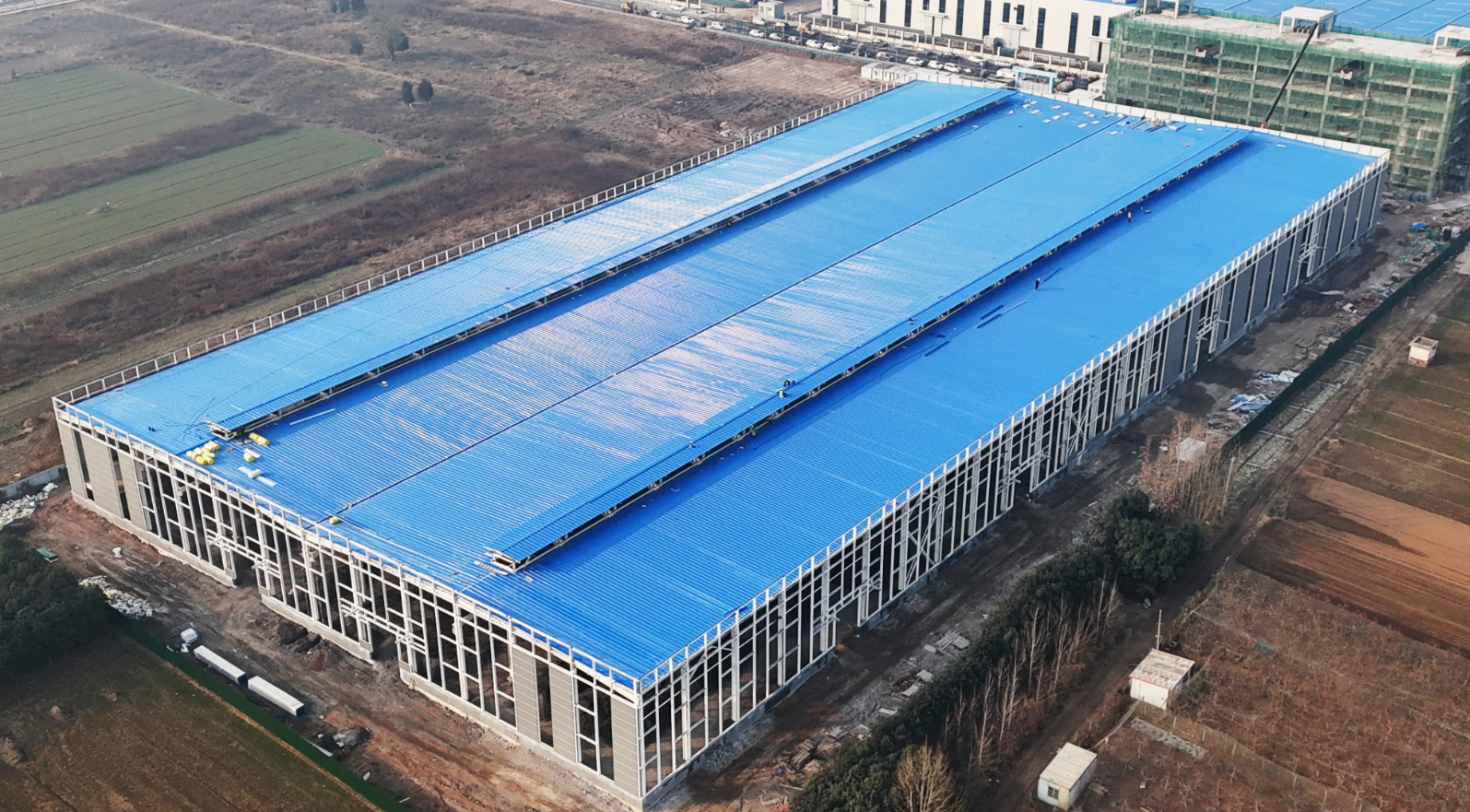
Resistance to Biological and Environmental Degradation
Steel’s inorganic composition eliminates the biological food sources that drive decay in wood and other organic materials—offering inherent resistance to termites, fungi, mold, and wood-boring insects.
-
Immunity to Decay: Unlike timber, it cannot rot or support mildew growth, even in high-humidity coastal or tropical environments where organic frames degrade rapidly.
-
Zero Chemical Preservation Needed: This immunity removes the need for chemical preservatives, fumigation, or poison barriers—slashing lifecycle chemical costs and avoiding environmental contamination.
In hygienic applications such as cold-storage warehouses, agricultural facilities, and food-processing plants, steel supports rigorous sanitation standards with minimal intervention. Its non-porous surface prevents moisture absorption, eliminating swelling, warping, and cracking caused by seasonal humidity shifts. As a result, an engineered steel structure can maintain full serviceability for over 50 years with only routine cleaning and periodic coating inspections.
Dimensional Stability and Load-Bearing Consistency Over Decades
Steel is a material that is unlikely to creep or crack as is the case with concrete, or bow, twist or swell as is the case with wood.
High Modulus of Elasticity: Creates a very stiff frame. With a stiff frame, there is less deflection over the life of the building.
Low Thermal Expansion Coefficient: Allows the structure to expand and contract with changes in temperature while still maintaining joint integrity.
Because the frame stays true and doesn’t distort or shift, floors stay level and crane rails stay true. Connection points don’t shift or require realignment or shimming. Because the frame stays true, owners don’t have to correct sagging or shifting as is commonly the case with alternative framing materials. Long-term geometric consistency also reduces wear on attached finishes. This reduces hidden costs and allows managers to have stable, low costs, predictable facility.
Use of Corrosion Protection Systems increase Service Life
There are many protective coatings or alloy systems that can be used to increase the life of a steel frame beyond the baseline. Corrosion management is essential in protecting a steel frame and keeping assets.
Galvanizing, Alloy Coatings and Fire Protection Systems
Most coatings or alloy systems on steel last only a few years at best in humid or salt spray environments. Hot-Dip Galvanizing is a sacrificial coatings system. Alloy coatings and a multi-layer paint system have improved sacrificial protection. The use of intumescent coatings provide passive fire protection.
Steel structure design life goals are 50 to 100 years, far exceeding the 15 to 25 year design life goals of steel structures with minimal corrosion protection (steel-technology.com).
Electrochemical and Barrier Defense
Cathodic Protection: A sacrificial anode system makes the entire steel structure a cathode, halting oxidation.
High-Performance Barriers: Moisture and oxygen are isolated from steel structures through precision applied sealants or gasketed connections, or through the use of encapsulation systems.
In coastal zones, corrosion is confined to localized areas and can be monitored with biannual visual inspections. Defects in the protective coating system must be repaired to prevent more widespread corrosion.
Predictable Maintenance of Steel Structures
Maintenance cost savings of 40 to 60 percent are quantified.
A steel structure’s natural resistance to deterioration creates a very consistent and predictable maintenance profile, resulting in measurable cost savings. Owners typically achieve 40% to 60% lower cumulative maintenance costs across a 50-year period when compared when compared to conventional construction.
These cost savings occur because there are no failure modes (i.e. decay, pests, warping, etc.) that require constant maintenance. As a result, the integrity of the structure is maintained, and repairs are typically limited to paint maintenance. Reputable industry sources estimate the annual maintenance costs for steel structures are less than 1% of the original cost, compared to conventional structures which cost 2% to 4% of the original cost.
Efficient Asset Management
Compared to other building materials, the condition of steel is easier to assess. Exterior surfaces can be inspected without the need for destructive testing. Additionally, because the connections are bolted, components can be replaced if necessary. Advances in technology, such as ultrasonic thickness gauging and digital adhesion gauges, allow owners to shift from reactive maintenance to a more proactive approach by integrating a digital twin.
Frequently Asked Questions (FAQ)
-
Q: Why is steel resistant to biological degradation? A: Steel's inorganic composition eliminates food sources for biological organisms like termites and fungi, making it immune to rot, mildew, or pest attacks.
-
Q: How does steel ensure dimensional stability over time? A: Steel has a high modulus of elasticity and low thermal expansion, preventing deflection, distortion, or settling under sustained loads and temperature fluctuations.
-
Q: What systems are used to protect steel against corrosion? A: Modern systems include hot-dip galvanizing, advanced alloy coatings, industrial paint systems, and electrochemical defenses like cathodic protection.
-
Q: What maintenance tasks are associated with steel structures? A: Steel structures primarily require recoating and bolt tightening, with annual costs often under 1% of initial capital cost.
-
Q: How does steel contribute to cost savings over its lifecycle? A: With minimal degradation and lower maintenance needs, steel structures reduce cumulative upkeep costs by 40–60% over 50 years compared to alternatives.