




Core Differences: Structural Characteristics Determine Application Scenarios
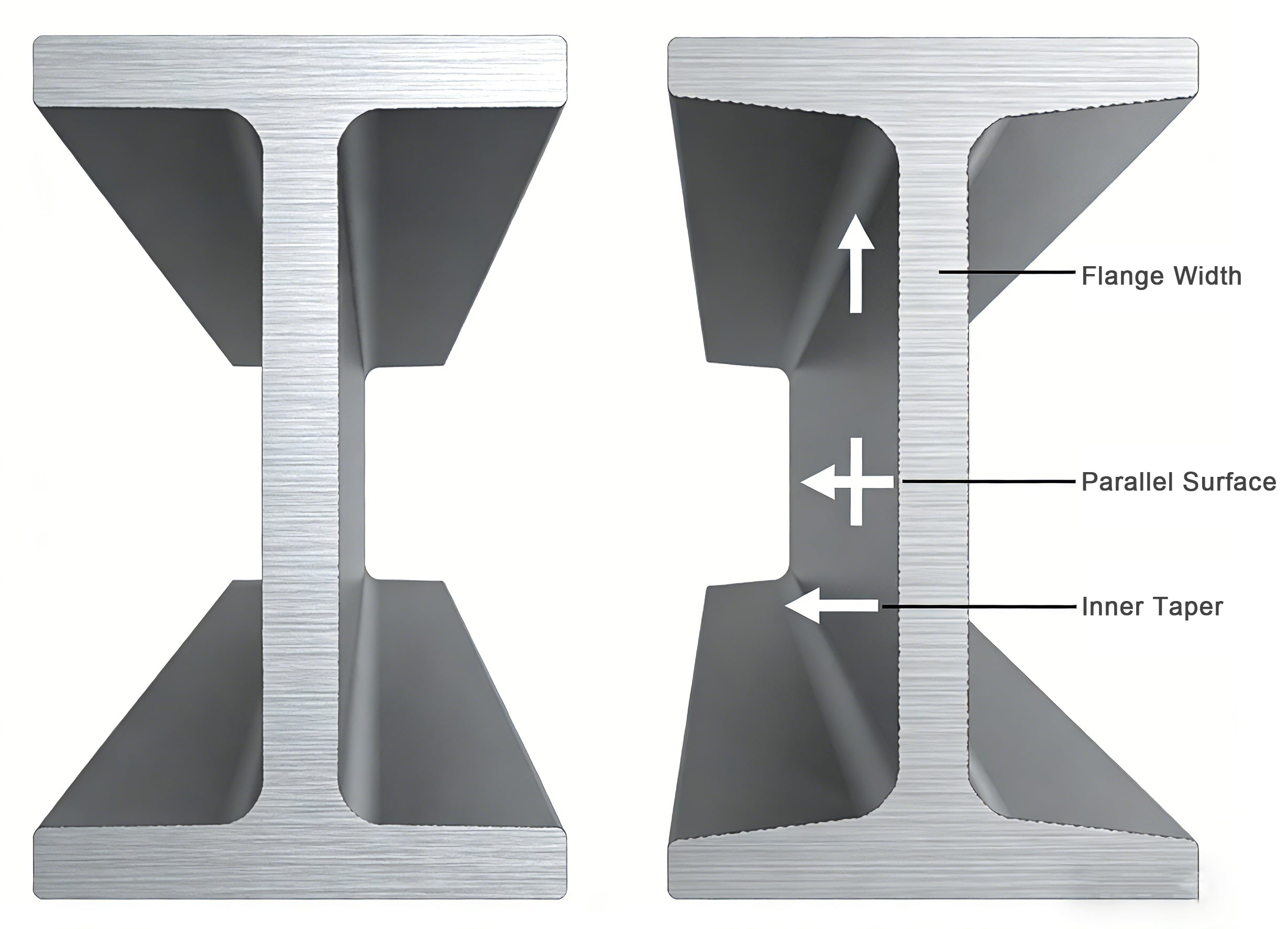
From a cross-sectional perspective, the fundamental distinction between H-beams and traditional I-beams lies in their flange configuration and geometric properties.
H-beams feature wide flanges with parallel inner and outer surfaces. This structural geometry enables them to provide strong rigidity in both principal planes, offering superior resistance to bending and torsion. Their symmetrical and efficient cross-section allows for more uniform stress distribution, making them highly suitable for large-span structures and heavy-load industrial environments.
In contrast, conventional I-beams have thinner flanges with tapered inner faces. Their structural efficiency is primarily concentrated along the strong axis direction, meaning their bending resistance is more pronounced in one principal plane. While adequate for certain applications, they are comparatively less versatile when multidirectional load performance is required.
For factory buildings with larger spans—such as those exceeding 18 meters—or facilities designed to accommodate significant dynamic loads, including overhead cranes with capacities above 5 tons, H-beams are typically the preferred solution. Their enhanced section modulus and overall stiffness provide greater structural reliability under complex loading conditions.
It is true that the unit price of H-beams may be approximately 5%–10% higher than that of traditional I-beams. However, due to their higher cross-sectional efficiency and superior load-bearing capacity, H-beams often allow for optimized steel consumption while still meeting safety standards. In many cases, the total steel quantity required can be reduced, offsetting the initial material cost difference and resulting in better overall cost control at the project level.
Therefore, what may initially appear as a higher material expense can ultimately translate into structural efficiency, improved safety margins, and long-term economic benefits.
Key Decision-Making Factors: Comprehensive Evaluation Based on Specific Project Requirements
Material selection should never rely solely on unit price comparisons. Instead, it must be evaluated comprehensively based on span, building height, crane configuration, load demands, and intended industrial use.
1. Main Structural Framework Selection
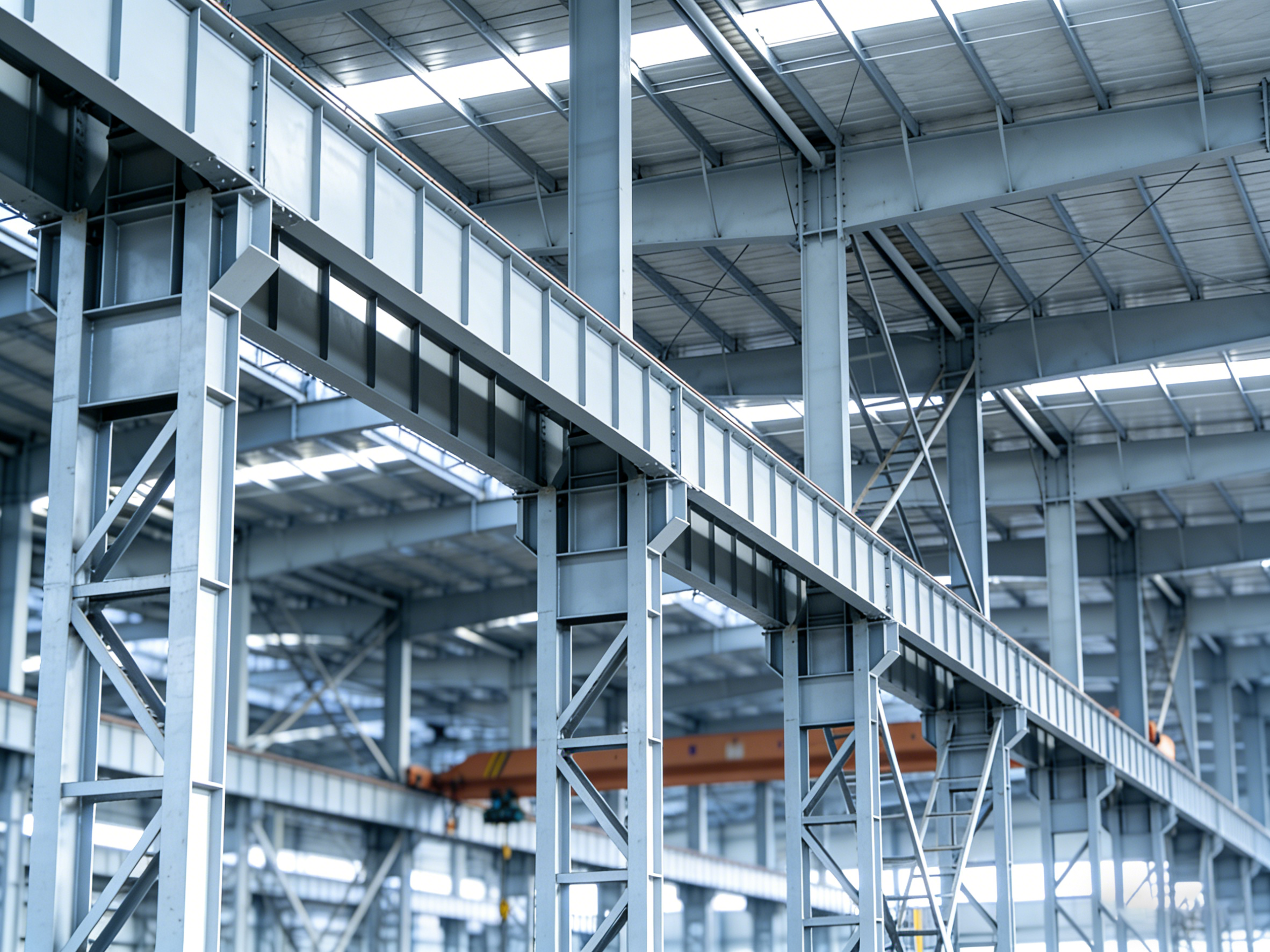
For primary load-bearing beams and columns forming the main structural framework of an industrial building, H-beams are generally recommended as the priority choice. Their excellent mechanical performance makes them suitable for the majority of modern industrial workshop requirements, especially in medium to large-span facilities.
The main structural frame is the core component of any steel building and represents a substantial portion of the total construction cost. Selecting H-beams for these critical elements ensures structural stability while enabling efficient material utilization. This approach supports both safety compliance and financial optimization, forming the foundation of a durable and economically sound steel structure system.
At Zhengzhou Weilan Steel Structure Engineering Co., Ltd., we conduct detailed structural calculations and load analyses before finalizing section specifications. Our engineering team evaluates not only immediate construction cost but also long-term performance, fatigue resistance, and potential future expansion requirements. By prioritizing structural integrity at the core framework level, we safeguard both operational safety and asset value.
2. Steel Consumption Estimation
Steel consumption per square meter is one of the most practical indicators influencing overall project budgeting. Span length, building height, and crane configuration directly determine the steel content of a factory building.
As a general reference:
- For a standard workshop with a 24-meter span and no overhead crane, steel consumption typically ranges from approximately 25 to 35 kilograms per square meter.
- For workshops equipped with overhead cranes, steel consumption may increase to 40 to 50 kilograms per square meter or even higher, depending on crane capacity and operational frequency.
In such scenarios, selecting H-beams can contribute to optimizing steel usage while maintaining structural stability. Due to their higher section efficiency, H-beams can deliver required strength and stiffness with a more rational distribution of material, potentially reducing redundant steel weight and improving overall structural economy.
It is important to note that steel consumption is not solely determined by beam type. Structural layout, bracing systems, roof loads, wind and seismic conditions, and future expansion plans all influence final steel quantities. However, choosing high-efficiency structural sections such as H-beams provides greater flexibility in achieving cost-performance balance.
3. Application of I-Beams in Specific Scenarios
Despite the advantages of H-beams, I-beams are not obsolete. In certain small-span and light-load applications, traditional I-beams may still offer cost advantages. For example, auxiliary structures, secondary framing members, or small storage buildings with minimal dynamic loading may not require the enhanced bidirectional stiffness of H-beams.
In such limited scenarios, I-beams can serve as a practical and economical solution. However, for mainstream industrial factory buildings—particularly those with medium to large spans, crane systems, or higher operational demands—H-beams generally outperform I-beams in terms of structural safety, material utilization efficiency, and long-term comprehensive economic performance.
Choosing I-beams solely based on lower unit cost without considering structural efficiency may lead to increased steel consumption, reduced safety margins, or limitations in future modifications. Therefore, rational evaluation is essential.
The Broader Perspective: Cost, Safety, and Lifecycle Value
The selection between H-beams and I-beams should be viewed within the broader framework of lifecycle engineering. Initial construction cost is only one component of total ownership cost. Structural durability, maintenance requirements, adaptability to operational changes, and risk mitigation must also be considered.
A well-designed steel structure workshop must maintain structural stability under sustained loads and dynamic operations for decades. Material choice directly influences fatigue performance, deflection control, vibration behavior, and resistance to environmental stressors. In industrial facilities where operational continuity is critical, structural reliability becomes even more valuable.
At Zhengzhou Weilan Steel Structure Engineering Co., Ltd., our philosophy emphasizes engineering-driven decision-making rather than price-driven compromise. We assist clients in evaluating structural systems holistically, ensuring that each material selection aligns with functional requirements, budget expectations, and long-term strategic goals.
Conclusion
The choice between H-beams and I-beams is not a matter of simple substitution but a strategic engineering decision that affects factory building cost control and structural safety.
H-beams, with their superior cross-sectional efficiency, balanced rigidity, and adaptability to large spans and heavy loads, are generally the optimal choice for mainstream industrial factory buildings. Although their unit price may be slightly higher, their contribution to structural safety, steel optimization, and long-term economic performance often justifies the investment.
I-beams may retain cost advantages in small-span, light-load applications, but for primary structural frameworks in modern industrial facilities, H-beams typically provide stronger performance and better lifecycle value.
Wise material selection forms the cornerstone of optimizing construction cost and ensuring long-term structural stability. Through professional analysis, precise calculation, and rational engineering design, Zhengzhou Weilan Steel Structure Engineering Co., Ltd. is committed to delivering steel structure solutions that combine safety, efficiency, and sustainable economic returns—helping clients build industrial facilities that are both resilient and future-ready.