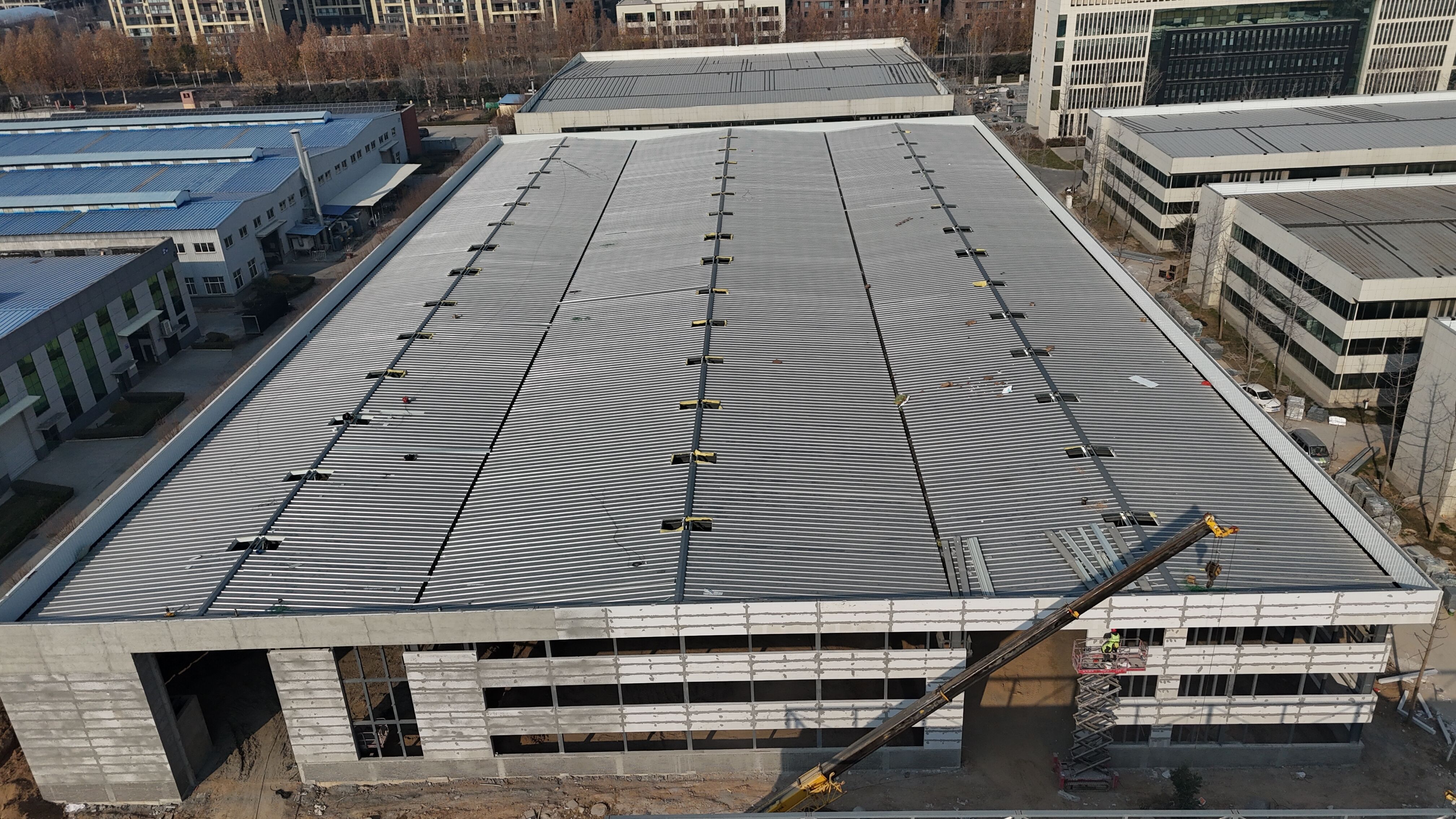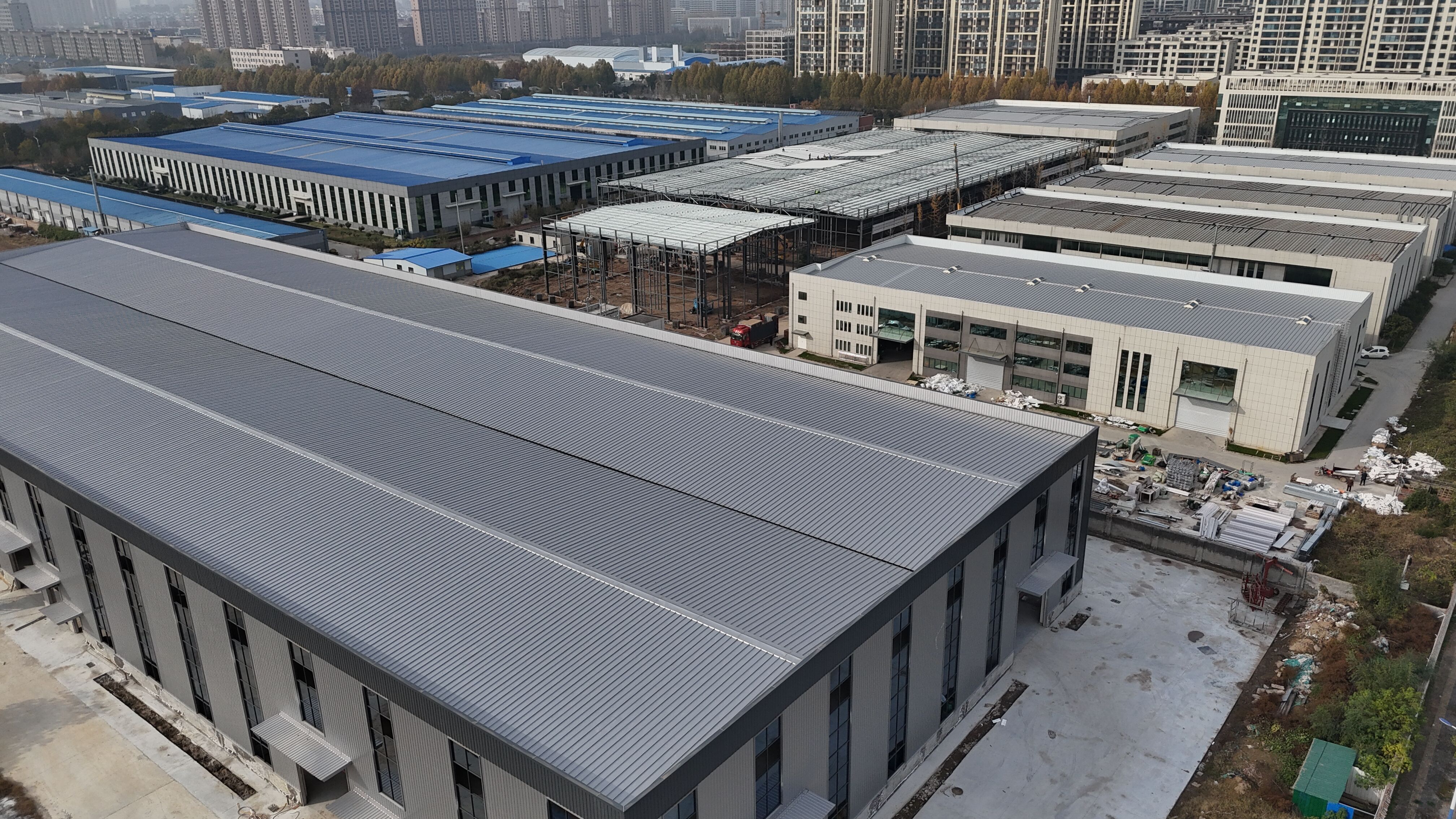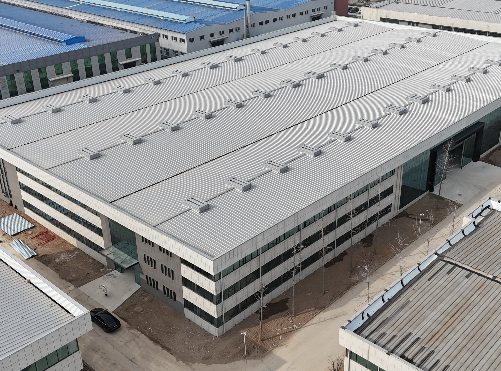
Structural Strength and Spatial Efficiency of Steel Warehouses
Construction with clear-span design allows for column-free layouts providing ease of material movement.
The ability to build spaces of over 30 meters using steel with no internal supports offers fully open floor areas for warehouses. This design flexibility allows for rapid and easy reconfiguration of material flow for consumers to handle a wide range of dynamic seasonally or operationally driven demands. Both forklifts and automated guided vehicles (AGVs) can traverse the layout without obstruction, cutting travel distance by about 30 percent compared to traditional layouts with column obstructions. High quality structural steel is designed to bend and withstand operational stresses over time. Additionally, it is designed to support heavy multi level storage racks.
Vertical Storage and Automation Are Supported by High-Bay Clearance and Load-Bearing Capabilities
With modern steel warehouses it is now possible to obtain clearance heights of over 40 feet. Height clearance is essential when companies want to implement modern automated storage and retrieval systems. The structural framing in these types of warehouses can carry loads in excess of 250 pounds per square foot. These frameworks also have to control deflection because framed structures will sag. This is critical for the stability and safety of the vertical racking systems. The majority of warehouses utilize a combination of reinforced concrete flooring and steel framing to control the concrete flooring deflection to within 1/8 of an inch. This is essential for the precision guidance of automated guided vehicles and for the robotic arms which require a robust mounting that is integrated into the floor. The suspended (cantilevered) beams offer solid support to automation equipment, particularly when stressed by seismic or other stability demands. It is hardly a coincidence that most logistics companies investing in new facilities opt for steel when high clearance and integrated smart warehouse technology are key design elements.
Scalability and Adaptive Design for Evolving Logistics Needs
Modular Expansion Capabilities Align with Demand Growth and Network Optimization
Off-site constructed steel warehouse systems offer built-in modularity for ease of expansion at any point in the future. Companies can expand or modify their services at any point, such as changing operational layouts, adjusting the purpose of their warehouse, or adding more staff in order to meet increased demand. Components of the warehouse are manufactured as specified at the construction site, and rapidly assembled to accommodate demand in busy seasons, including the ability to reallocate the warehouse region. Vertical construction is also possible with the steel warehouse systems. Exceptional performance is achieved in high bay areas using automated storage and retrieval systems (AS/RS) along with mezzanines, so facilities can enhance their productivity without adding floor space. Need to introduce new products or implement robotic order fulfillment systems? Simply reposition some racks, conveyors, or mezzanines. Industry experts observing this phenomenon have reported that facilities exercising this type of flexibility have reduced reconfiguration costs by an estimated thirty percent and have been able to relocate or merge sites more quickly.
Automation-Ready Infrastructure for Smart Steel Warehouses
Precision Framing, Dock Integration, and Floor Flatness for AGVs and AS/RS
Engineered steel warehouse structures provide the following foundational enablers for integrated automation systems:
Precision Framing: Laser cutting and milling of components is certified ±2 mm for each component, allowing AS/RS masts, rails, and gantries to achieve flawless alignment.
Integrated Dock Systems: Robotic palletizers are able to accommodate pre-engineered leveler pits, structural dock shelters, and sealed transitions to avoid thermal bridging/ air seepage.
Ultra Flat Floors: guidance and load stability are provided by AGVs because laser-guided concrete placement achieves ≤3mm variation over 10 foot spans to meet ISO 1101 flatness standards.
Open web steel design trusses allows for easier installation of conduits and sensors for smart monitoring systems. Plus, the framing material is stiff and will not deflect due to the weight of robotic storage equipment. Companies selecting integrated building solutions versus retrofitting existing spaces save an average of 40% of the time needed to get new automated systems operational. Design includes space saving features in the foundation, including concealed utility channels under the flooring and expansion joints to allow for future tech upgrades.
Speed-to-Operational-Value: Lifecycle Advantages of Prefabric Steel Warehouses
Within the first few weeks of site preparation, steel warehouses that are made of prefabricated components enable the construction of facilities that are fully functional with the best long-term cost benefits give or take an improvement of 30 to 50 percent construction time reduction on site on her project. Some competitors have relocated to new sites shortly after 2 to 4 weeks of site preparation. Quicker construction time reduces the time needed for financing construction and so construction time impacts subsequent cash flows. There are so many benefits with the structures apart from construction time.
Reduced lifetime maintenance: Factory-applied corrosion-resistant coatings (e.g. Galvalume® or zinc-aluminum alloys) corrosion-resistant coatings are an effective solution to avoid corrosion, maintenance, and service life issues.
Unmatched Scalability: Modular framing allows for easy and seamless lateral or vertical expansion without demolition or need for structural reinforcement.
Operational Resilience: structures designed to AISC and AISI standards and geared to achieve decades of use with heavy use cycle and minimum downtime.
Steel's end-of-life and recycling: Steel, the most recycled overall, best material for end-of-life management, and offers over and 90% recyclability steel at deconstruction.
Recording over 30+ year asset life, with an expected convergence of deferred maintenance, energy-efficient envelope, and adaptive reuse, the total cost of ownership ensures the initial capital outlay is conclusively higher than conventional builds.
Frequently Asked Questions
Compared to traditional builds, what makes steel warehouses more efficient?
Offering an excellent strength-to-weight ratio, steel warehouses enable column-free designs that enhance material flow and space efficiency. They also facilitate vertical storage and automation with high-bay clearances.
In what ways can automation technologies be incorporated into steel warehouses?
Steel warehouses have precision framing, dock system integration, and ultra-flat flooring; all of which allow for seamless operation of automated guided vehicles and automated storage and retrieval systems.
Is it easy to expand steel warehouses?
Yes, steel warehouses can be expanded by modular means, allowing for companies to keep operational flow uninterrupted as they make changes to keep pace with demand.
What are the lifecycle benefits of prefabricated steel warehouses?
Prefabricated steel warehouses have shorter construction periods and longer intervals between required maintenance compared to their competitors. They are more scalable, operationally resilient, and are more sustainable from an environmental standpoint because they are highly recyclable.