Section One: Overview of PEBs and Basic Structure and Engineering Concepts
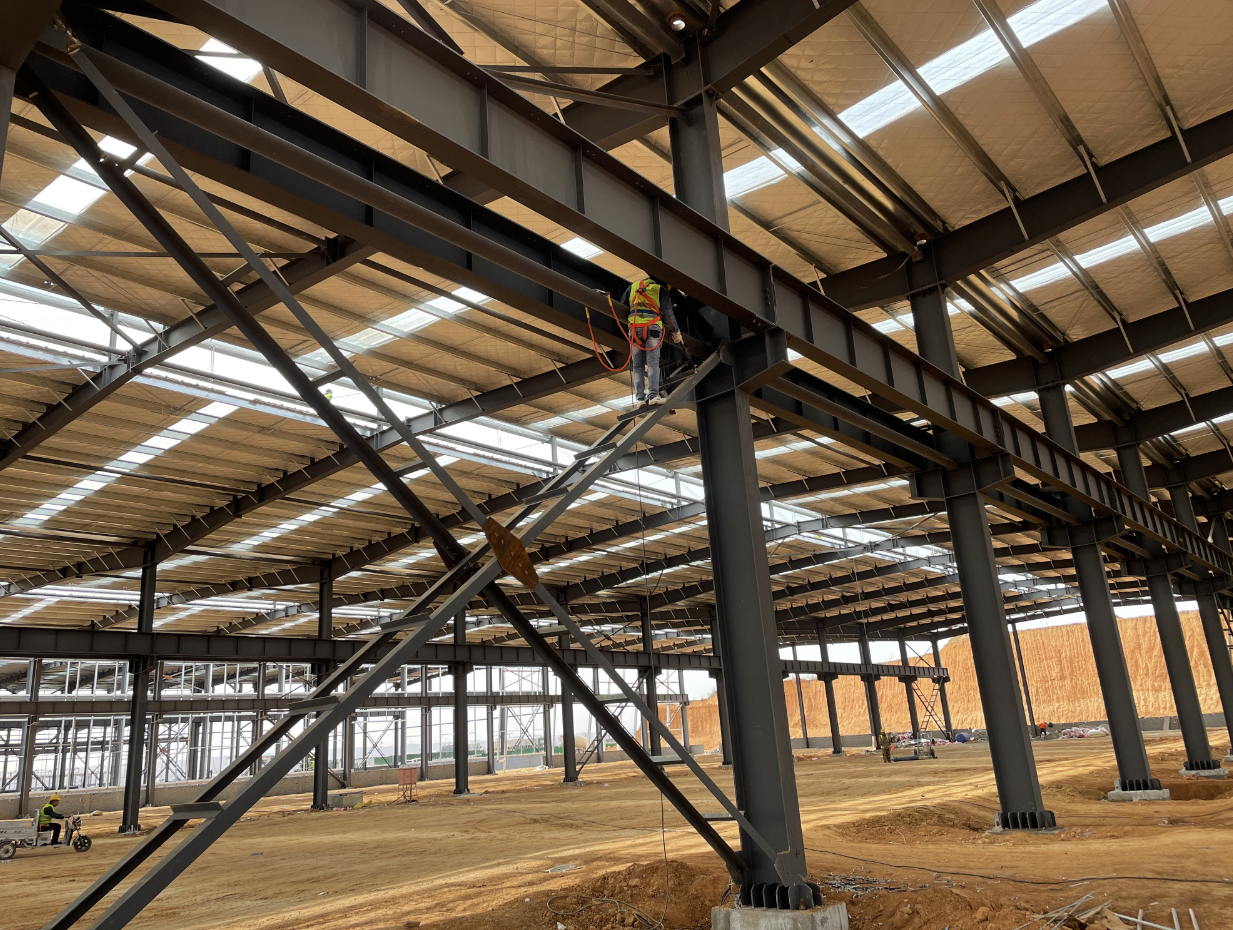
PEBs are revolutionizing the construction of warehouses by integrating the design and fabrication processes using digitally controlled systems. Compared to PEBs, conventional construction systems are inefficient. PEBs utilize advanced structural engineering software to aid the design of components which will be structurally sound in relation to the loads they must support and the occupancy load, and how they will fit within a defined spatial framework. PEBs are designed to be completely fabricated in a factory, from large components such as structural steel frames down to the smallest parts such as connection plates. This eliminates the need for cutting and welding at the construction site, which (in the middle of a construction site) can be a source of wasted materials. Construction site practices have been replaced with factory practices, which improves quality control. Factory fabrication reduces the potential for construction materials to be compromised by the rain. PEBs offer a reduction in waste by approximately 30% through careful design and fabrication. PEB components are pre-marked, drilled, and bolted to ease assembly, which is an innovation over the days of waiting for glue and cement to cure. Integration of fabrication and design is a PEB hallmark.
Key Structural Hallmarks: Bolted Connections, Hot Rolled Steel Sections, and Precision Factory Fabrication
Three types of engineering mark the sturdiness of PEB warehouses:
Bolted Connections: Instead of field welding, large, strong galvanized bolts are used, allowing for rapid building and changes, while collapsing under seismic loads.
Hot-Rolled Steel Sections: I-beams and channels, formed at 1700°F, have the best strength-to-weight ratio allowing spans of up to 90 m without columns.
Precision Fabrication: Components are manufactured using CNC machinery at tolerances of ±0.5mm for ease of assembly and direct interoperability.
All parts of this factory-controlled process are subjected to multiple quality control measures such as ultrasonic testing and dimensional checks. Hot-rolled sections are shot blasted before a corrosion-resistant coating is applied, increasing the service life to greater than 50 years. These factors combined give PEB warehouses the ability to house automated storage systems of over 40 m in height with minimal maintenance.
Time, Cost, and Construction Logic of PEB Warehouse vs. Conventional Warehouse
Site Impact, Process, and Labor, and PEB Warehouse Assembly vs. Cast in Place Construction
Whereas PEB warehouses utilize bolted components factory fabricated at the factory, and assembled on-site, casting in place is the traditional method for construction. This reduces the demand for skilled labor by 40-60% because assembly is simplified for specialist trades. Site disturbance is greatly reduced as components are delivered pre-cut, and pre-drilled, eliminating the need for concrete cure delays and wasting materials by up to 30%.
Accelerated Timeline: 3-6 Months vs 9-18 Months to Occupancy
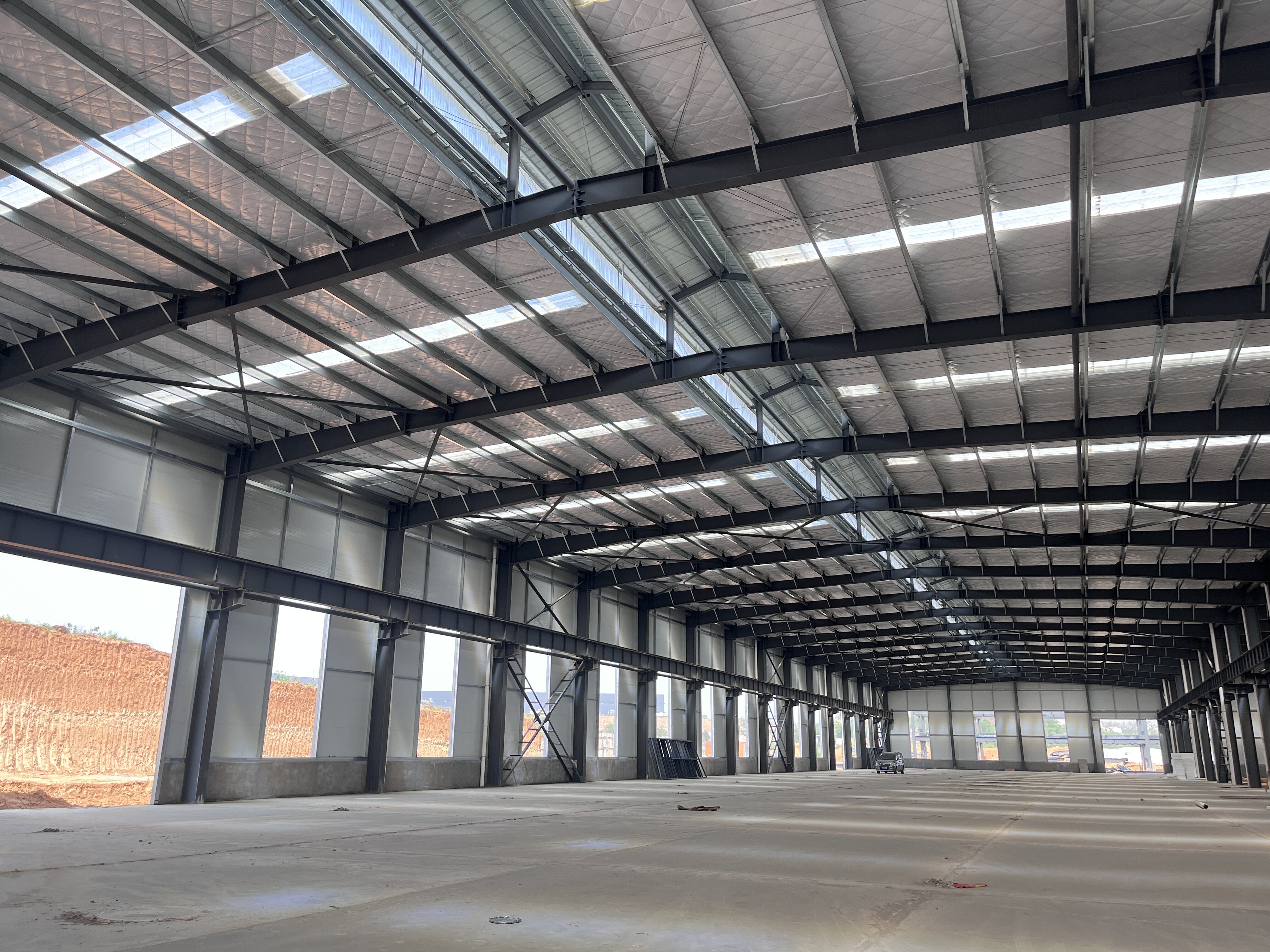
Because of the precision of the factory, PEB warehouses are able to fully finish construction in 3-6 months as opposed to the traditional method which can span 9-18 months. This is possible through parallel workstreams, such as construction of the foundation while the components are fabricated. Weather delays are reduced by up to 80% because of the off-site construction of 80% of the project, allowing logistics operators to begin revenue generating activities on the site construction much earlier.
Understanding the Steel Cost Paradox. How Optimized Steel Use And Reduced On-Site Work Lead To A Lower Total Installed Cost
In spite of a design that is heavy on steel, PEB warehouses save costs between 15 and 25% due to:
Efficiency of materials: Frames that are designed on computers, as opposed to conventional structures, use 30% less steel.
Reduction in labor: Less on-site workers results in savings on the payroll of between 20 and 35%
Overhead costs: Less time spent on a project leads to less money spent on financing and project management.
All of this leads to a lower total cost of ownership while maintaining adequate structural integrity
What Makes PEB Warehouses Stand Out in Modern Logistics: Flexibility, Scalability and Future-Proofing
Column-Free Spans Up to 90m: Facilitating AS/RS, High-Bay Racking, and Dynamic Workflow Layouts
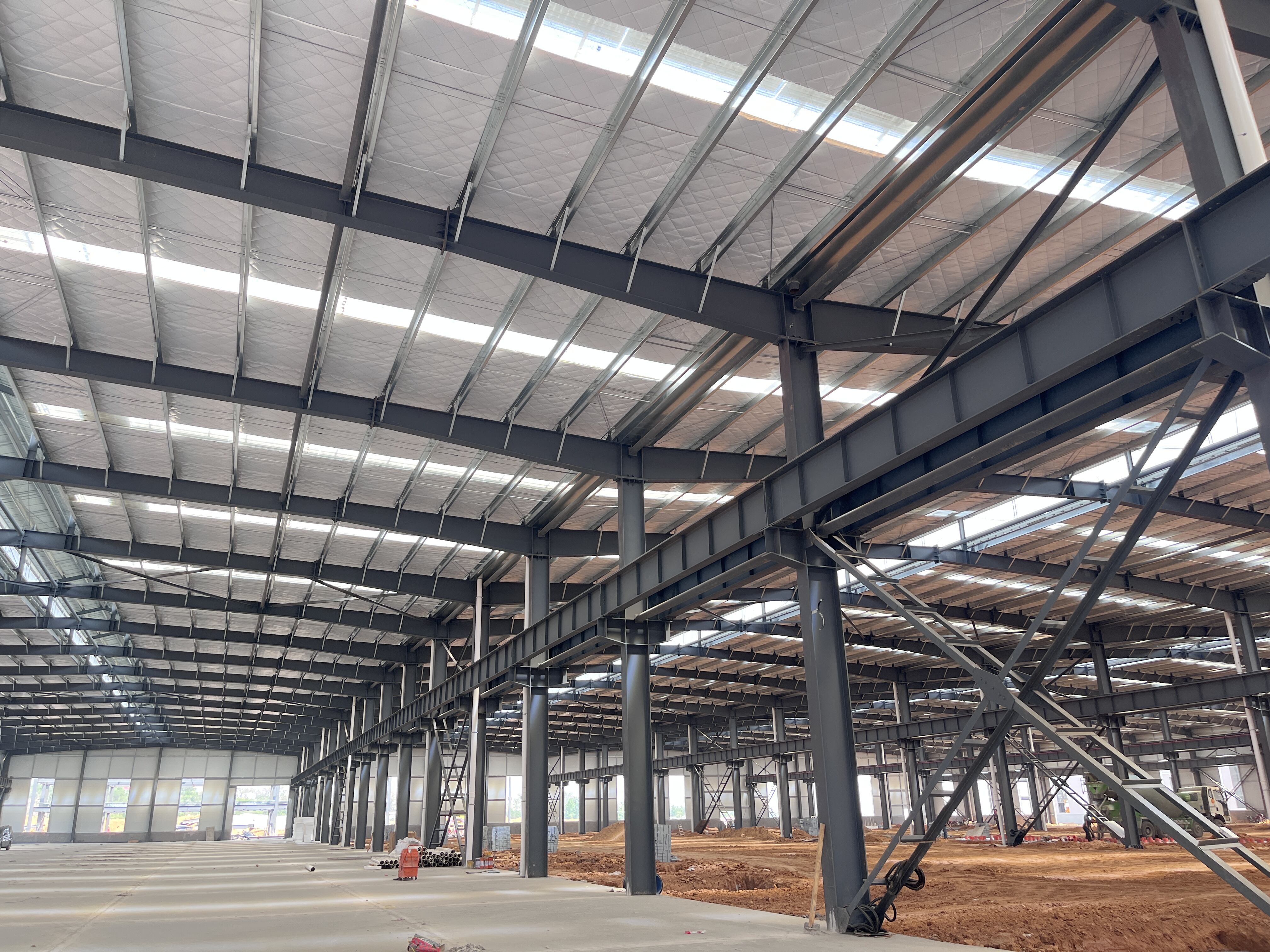
With interior spaces that are for the most part column-free and span lengths close to 90 meters, PEB warehouses are highly efficient. This favorable design allows the installation of Automated Storage and Retrieval Systems alongside ultra-high racking that is capable of reaching 40 meters. The absence of structural columns translates to about a 20% safer usable floor area as designed, eliminating the risk of the warehouse collapsing in the event of an earthquake which is quite an invaluable feature for those operating in the ASEAN regions that experience tremors. The open design layout promotes operational flexibility to adjust workflow configurations as inventory picks change, robot pathways, and cross-docking arrangements. There are also no concerns about structural integrity and load capacity because these warehouses are built with high-performance steel frames designed to sustain heavy-duty applications and loads exceeding 12 tons per square meter.
Phased Expansion Capability: CP ALL’s Chonburi Cold Storage Hub (2022) as a Scalable PEB Warehouse Case Study
During our research PEB’s for Big Mart Thailand, the factor we valued most highly was the ability to scale. Prior to us, Big Mart Thailand was the only company to successfully complete a major expansion of a Chonburi cold storage facility, increasing the facility’s size from 18,000 square meters to in excess of 32,000 square meters. Even as they completed this significant expansion, Big Mart Thailand was able to maintain their critical -18 degree Celsius operations. Expansion in most cases would be impossible with any standard method of construction. In this case, Big Mart Thailand utilized bolt-on additions, which took approximately 11 weeks to complete. These additions used prefabricated, factory-produced wall panels and roof trusses. This modular approach to construction reduced expansion costs by up to 40% as compared to standard construction methods, in addition to maintaining the cold chain throughout all phases of work. During each phase of expansion, engineers focused on connecting the New additions with the old mechanical, electrical, and plumbing systems. This detail demonstrated that we can expect our warehouses to respond to our changing market demands without the need for a complete operational shut down. After all expansion phases were completed, Big Mart Thailand reported a 15% reduction in energy costs which was attributed to the increased insulation of the facility.
FAQ
What is a PEB warehouse?
A PEB (Pre-Engineered Building) warehouse is a construction style of building about warehouses that emphasizes the use of built to specification components that are manufactured before they are sent to location for construction. This allows for construction to be completed more efficiently and in a shorter period, while also reducing material waste. This style also enables greater overall quality control.
What distinguishes a PEB warehouse from a standard warehouse?
A standard warehouse has construction methods which use more materials and take longer to build. PEB warehouse construction uses components that are prefabricated in factories and finished by bolting the components together. This construction method saves time and materials.
What benefits does a PEB warehouse have?
The PEB warehouse construction method has more benefits than standard construction. It saves time because construction is more efficient and the prefabricated materials make construction labor more efficient. The flexibility and scalability are benefits of the quality controlled prefabricated materials as well.
How quickly can a PEB warehouse be built?
Traditional construction methods take approximately 9 to 18 months to complete a warehouse, whereas PEB construction has a time frame of 3 to 6 months. This method is rapid because of construction methods that occur concurrently.
Can modern logistics systems be supported by PEB warehouses?
Because PEB warehouses have sturdy steel frames and column-free designs, they can support modern logistics systems.